

Hey there! As a supplier of Ethyl Silicate 32, I often get asked about the setting time of Ethyl Silicate 32 in foundry molds. It's a crucial topic for those in the foundry industry, so I thought I'd dive deep into it and share some insights.
First off, let's understand what Ethyl Silicate 32 is. Ethyl Silicate 32 is a type of silicate ester that's widely used in the foundry industry. You can find more detailed info about it Ethyl Silicate 32. It's known for its ability to form a strong and durable bond in foundry molds, which helps in producing high - quality castings.
The setting time of Ethyl Silicate 32 in foundry molds isn't a one - size - fits - all kind of thing. It depends on several factors. One of the main factors is the temperature. Generally, higher temperatures speed up the setting process. When the temperature is warm, the chemical reactions that cause Ethyl Silicate 32 to set occur more rapidly. For example, in a foundry where the ambient temperature is around 25 - 30°C, the setting time can be relatively short compared to a colder environment.
On the flip side, in colder conditions, say around 10 - 15°C, the setting time can be significantly longer. The molecules of Ethyl Silicate 32 move more slowly at lower temperatures, which means the cross - linking and hardening reactions take more time to complete. So, if you're working in a cold foundry, you might need to adjust your production schedule to account for the extended setting time.
Another important factor is the humidity. High humidity can have a big impact on the setting time of Ethyl Silicate 32. Water in the air can react with Ethyl Silicate 32 and affect its setting process. In a humid environment, the excess moisture can slow down the setting time or even cause some issues with the quality of the mold. The water can interfere with the chemical reactions that are responsible for the hardening of Ethyl Silicate 32. So, foundries often use dehumidifiers to control the humidity levels and ensure consistent setting times.
The ratio of Ethyl Silicate 32 to other components in the mold mixture also plays a vital role. If you use a higher proportion of Ethyl Silicate 32, it can potentially speed up the setting time. However, this also needs to be balanced with other factors like the strength and porosity requirements of the mold. Sometimes, adding too much Ethyl Silicate 32 can lead to a mold that's too brittle or has poor permeability.
Now, let's talk a bit about how Ethyl Silicate 32 compares to other silicate esters like Tetraethoxysilane and Methyl Silicate. Tetraethoxysilane is a more pure form of silicate ester. It generally has a faster setting time compared to Ethyl Silicate 32. But it also has some drawbacks. It can be more expensive and more difficult to handle in large - scale foundry operations.
Methyl Silicate, on the other hand, has a different chemical structure. It's often used in different applications within the foundry industry. Its setting time can vary depending on similar factors as Ethyl Silicate 32, but it might have different reactivity profiles. For example, Methyl Silicate might be more sensitive to certain catalysts or additives used in the mold mixture.
In a foundry, the setting time of Ethyl Silicate 32 can range from a few hours to a full day. For small - scale molds with ideal conditions (warm temperature, low humidity, and the right mixture ratio), the setting time can be as short as 2 - 3 hours. But for larger, more complex molds or in less - than - ideal conditions, it can take up to 24 hours or even longer.

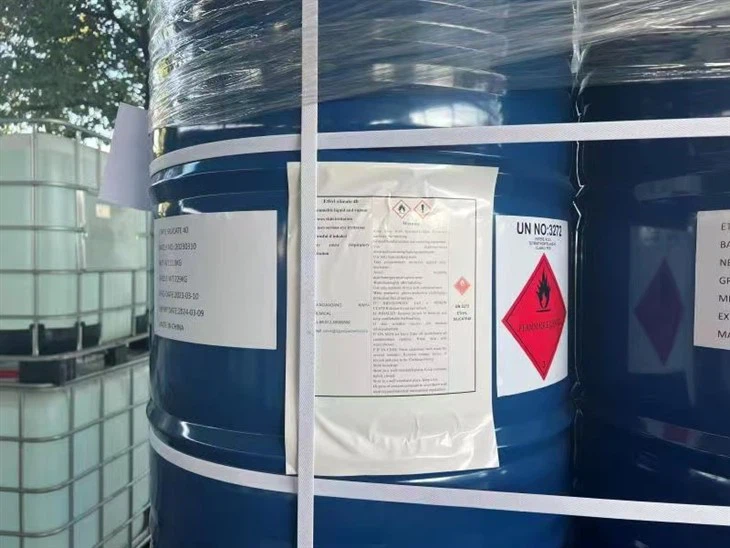
It's also important to note that the setting time isn't just about waiting for the mold to harden. There's a curing process that follows the initial setting. Curing helps to further strengthen the mold and improve its overall properties. During the curing process, the mold is usually kept at a specific temperature and humidity for a certain period. This allows the chemical bonds in the Ethyl Silicate 32 to fully develop and gives the mold its final strength and durability.
As a supplier of Ethyl Silicate 32, I've seen firsthand how important it is for foundries to have a good understanding of the setting time. It can make a huge difference in the efficiency and quality of their production. If you're having trouble with the setting time in your foundry, we can work together to figure out the best solutions. Maybe it's adjusting the temperature, humidity, or the mixture ratio.
We offer high - quality Ethyl Silicate 32 that's consistent in its properties. This consistency helps in predicting the setting time more accurately. Our team of experts is always available to provide technical support and advice on how to optimize the use of Ethyl Silicate 32 in your foundry molds.
If you're interested in learning more about Ethyl Silicate 32 or want to discuss your specific foundry needs, don't hesitate to reach out. We're here to help you get the most out of our product and improve your foundry operations. Whether you're a small - scale foundry or a large industrial operation, we can tailor our solutions to meet your requirements.
In conclusion, the setting time of Ethyl Silicate 32 in foundry molds is a complex but manageable aspect of foundry production. By understanding the factors that affect it and working with a reliable supplier, you can ensure that your molds are produced efficiently and with high quality. So, if you're looking for a partner in your foundry journey, consider us as your go - to supplier of Ethyl Silicate 32.
References
- Industry reports on silicate esters in foundry applications
- Technical data sheets of Ethyl Silicate 32, Tetraethoxysilane, and Methyl Silicate