

Hey there! As a supplier of Hexamethyldisilazane, I often get asked about the differences between Hexamethyldisilazane (HMDS) and hexamethyldisiloxane (HMDSO). So, I thought I'd write this blog to break it down for you.
Chemical Structure and Basic Properties
Let's start with the chemical structure. HMDS has the chemical formula $\mathrm{(CH_3)_3Si - NH - Si(CH_3)_3}$. It's got a nitrogen atom in the middle, connecting two trimethylsilyl groups. This nitrogen atom gives HMDS some unique chemical properties. It's a colorless liquid with a pungent ammonia - like odor.
On the other hand, HMDSO has the formula $\mathrm{(CH_3)_3Si - O - Si(CH_3)_3}$. Instead of a nitrogen atom, there's an oxygen atom linking the two trimethylsilyl groups. HMDSO is also a colorless liquid, but it has a much milder, more ether - like odor compared to HMDS.
In terms of physical properties, HMDS has a boiling point of around 126 °C. It's relatively reactive due to the presence of the N - H bond. The N - H bond can react with various electrophiles, making it useful in many chemical reactions. HMDSO, with its Si - O - Si linkage, is more stable. It has a boiling point of about 100 °C, which is lower than that of HMDS. This difference in boiling points can be important when it comes to separation processes in chemical synthesis.
Reactivity and Applications
Hexamethyldisilazane (HMDS)
One of the most common uses of HMDS is as a silylating agent. Silylation is a process where a silyl group ($\mathrm{-Si(CH_3)_3}$) is introduced into a molecule. HMDS can react with compounds containing active hydrogen atoms, such as alcohols, amines, and carboxylic acids. For example, when it reacts with an alcohol ($\mathrm{R - OH}$), it forms a trimethylsilyl ether ($\mathrm{R - O - Si(CH_3)_3}$) and releases ammonia.
This silylation reaction is widely used in organic synthesis. It can protect functional groups during a reaction sequence, preventing them from reacting with other reagents. After the desired reaction is complete, the silyl group can be removed easily, regenerating the original functional group.
In the semiconductor industry, HMDS is used as an adhesion promoter. It helps to improve the adhesion between photoresists and silicon wafers. By treating the wafer surface with HMDS, the photoresist can adhere better, which is crucial for accurate pattern transfer during the photolithography process.
Hexamethyldisiloxane (HMDSO)
HMDSO is mainly used as a solvent and a building block in the production of silicone polymers. As a solvent, it has good solubility for many organic compounds. It's also relatively inert, which means it won't react with most of the substances it's mixed with.
In the production of silicone polymers, HMDSO can be polymerized to form longer - chain silicone compounds. These silicone polymers have a wide range of applications, from lubricants and sealants to personal care products like shampoos and conditioners. The Si - O - Si backbone in the polymers gives them excellent thermal stability, low surface tension, and good water - repellent properties.
Safety and Handling
When it comes to safety, both HMDS and HMDSO have their own considerations. HMDS is flammable and can react violently with water, releasing ammonia gas. Ammonia is a toxic and irritating gas, so proper ventilation is essential when handling HMDS. It can also cause skin and eye irritation, so wearing appropriate personal protective equipment (PPE) like gloves and goggles is a must.
HMDSO is less reactive than HMDS. It's also flammable, but its reaction with water is much less violent. However, it can still cause irritation to the skin and eyes. As with any chemical, it's important to follow safety guidelines when handling HMDSO.
Market Availability and Pricing
As a supplier of HMDS, I can tell you that the market demand for HMDS is mainly driven by the organic synthesis and semiconductor industries. The price of HMDS can vary depending on factors such as purity, quantity, and market conditions. Generally, higher - purity HMDS is more expensive.
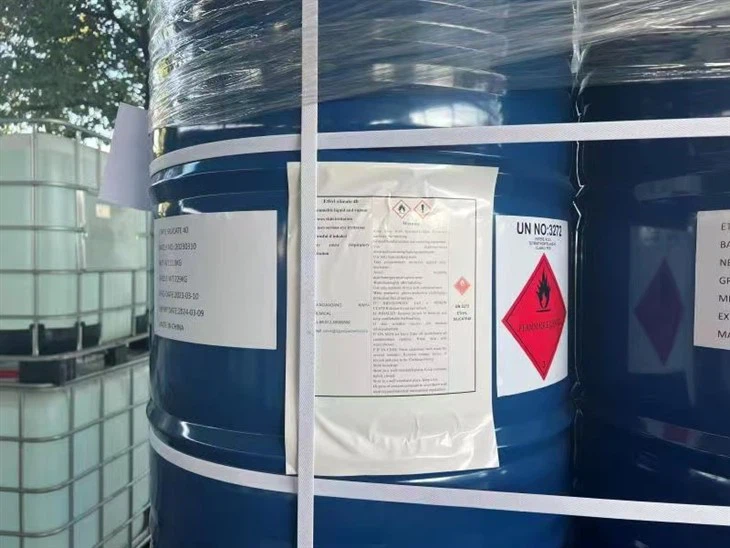

HMDSO, on the other hand, has a broader market due to its use in the silicone polymer industry. The price of HMDSO is also influenced by market factors, but it's often more stable compared to HMDS because of the large - scale production in the silicone industry.
Related Products
If you're interested in other silicone - related products, we also offer Ethyl Silicate 32, Vinymethyltrimethoxysilane, and Ethyl Silicate 28. These products have their own unique properties and applications in various industries.
Conclusion
In conclusion, while Hexamethyldisilazane and hexamethyldisiloxane may seem similar at first glance because of their similar names and chemical structures, they have distinct differences in terms of chemical reactivity, applications, and physical properties. HMDS is more reactive and is mainly used in organic synthesis and semiconductor manufacturing, while HMDSO is more stable and is widely used in the production of silicone polymers.
If you're in the market for Hexamethyldisilazane or have any questions about its applications, feel free to reach out. We're here to help you with your procurement needs and answer any technical questions you might have. Whether you're a small - scale researcher or a large - scale manufacturer, we can provide the right quantity and quality of HMDS for your specific requirements.
References
- Smith, J. Organic Chemistry: Principles and Applications. 3rd ed., Wiley, 2018.
- Jones, A. Silicone Chemistry and Applications. Elsevier, 2020.