

Ethyl Silicate 32, a crucial chemical compound, finds extensive applications in various industries such as coatings, refractories, and foundry. As a reliable supplier of Ethyl Silicate 32, I am often asked about the production process of this valuable substance. In this blog post, I will delve into the detailed steps involved in the production of Ethyl Silicate 32.
1. Raw Materials
The production of Ethyl Silicate 32 starts with carefully selected raw materials. The primary ingredients are silicon tetrachloride (SiCl₄) and ethanol (C₂H₅OH). Silicon tetrachloride is a colorless, fuming liquid with a pungent odor. It is a key intermediate in the production of many silicon - based compounds. Ethanol, on the other hand, is a well - known alcohol that is widely available and relatively inexpensive.
2. Reaction Process
The reaction between silicon tetrachloride and ethanol is the core step in the production of Ethyl Silicate 32. This reaction is an esterification process, where the chlorine atoms in silicon tetrachloride are replaced by ethoxy groups (-OC₂H₅) from ethanol.
The chemical equation for the reaction is as follows:
SiCl₄ + 4C₂H₅OH → Si(OC₂H₅)₄+ 4HCl
This reaction is highly exothermic, which means it releases a large amount of heat. Therefore, it must be carefully controlled to prevent overheating and ensure the safety of the production process. Usually, the reaction is carried out in a well - equipped reactor with proper cooling systems. The reactor is often made of materials that can resist the corrosive nature of silicon tetrachloride and hydrochloric acid (HCl) produced during the reaction, such as stainless steel lined with special coatings.
3. Intermediate Products and Further Reactions
The initial product of the reaction between silicon tetrachloride and ethanol is tetraethyl orthosilicate (TEOS), also known as Ethyl Silicate 40. However, Ethyl Silicate 32 has a different chemical composition and properties compared to TEOS. To obtain Ethyl Silicate 32, further reactions and processes are required.
Ethyl Silicate 32 is a partially hydrolyzed and condensed form of TEOS. Hydrolysis is the reaction of TEOS with water, which breaks the Si - OC₂H₅ bonds and forms Si - OH (silanol) groups. The chemical equation for the hydrolysis of TEOS is:
Si(OC₂H₅)₄+ 2H₂O → SiO₂ + 4C₂H₅OH
After hydrolysis, condensation reactions occur between the silanol groups. During condensation, water is eliminated, and Si - O - Si bonds are formed, leading to the formation of oligomers and polymers. The degree of hydrolysis and condensation is carefully controlled to achieve the desired properties of Ethyl Silicate 32, such as its molecular weight, viscosity, and silicon dioxide content.
4. Purification and Quality Control
Once the reactions are completed, the product mixture contains Ethyl Silicate 32, along with some by - products, unreacted raw materials, and impurities. Purification is an essential step to obtain high - quality Ethyl Silicate 32.
The purification process typically involves distillation. Distillation is a separation technique based on the differences in boiling points of the components in the mixture. By carefully controlling the temperature and pressure in the distillation column, Ethyl Silicate 32 can be separated from other substances.
Quality control is also a crucial part of the production process. Various analytical techniques are used to ensure that the final product meets the required specifications. For example, gas chromatography can be used to analyze the chemical composition of Ethyl Silicate 32, and viscosity measurements can be used to assess its physical properties.
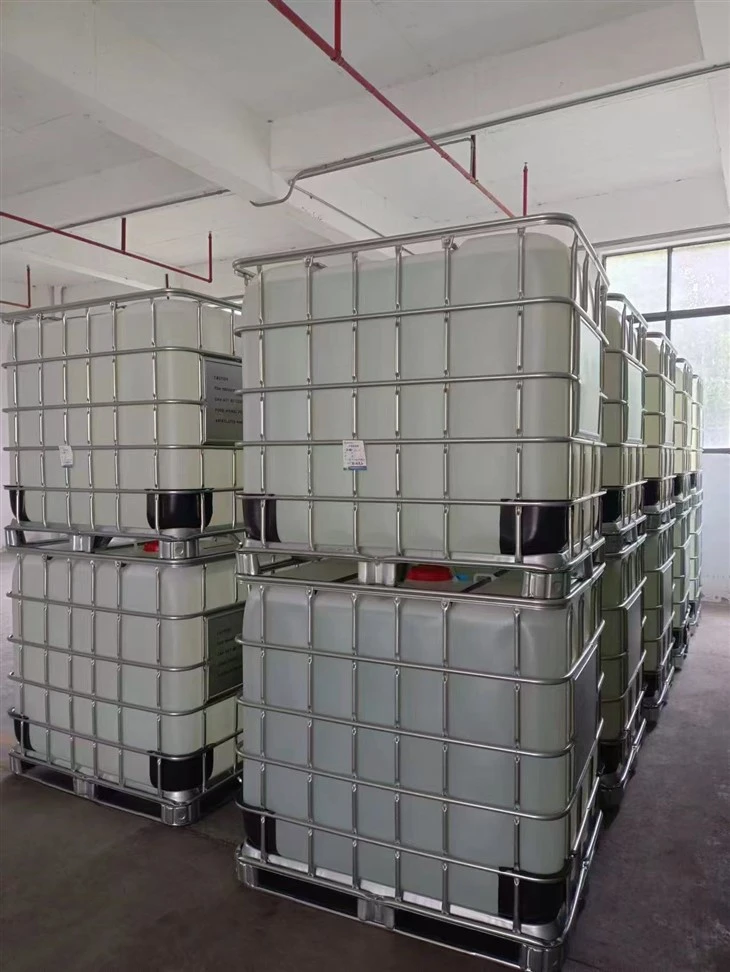

5. Packaging and Storage
After purification and quality control, the Ethyl Silicate 32 is ready for packaging. It is usually packaged in sealed containers made of materials that are resistant to corrosion and leakage, such as plastic drums or stainless - steel tanks.
Proper storage conditions are also important to maintain the quality of Ethyl Silicate 32. It should be stored in a cool, dry place away from direct sunlight and sources of heat. Exposure to moisture can cause further hydrolysis and condensation reactions, which may change the properties of the product.
Applications of Ethyl Silicate 32
Ethyl Silicate 32 has a wide range of applications due to its unique properties. In the coatings industry, it is used as a binder in high - performance coatings. The Si - O - Si bonds in Ethyl Silicate 32 can form a strong and durable film, providing excellent adhesion, corrosion resistance, and heat resistance to the coated surface.
In the refractories industry, Ethyl Silicate 32 is used as a binder for refractory materials. It can improve the strength and thermal stability of refractories, making them suitable for use in high - temperature environments such as furnaces and kilns.
In the foundry industry, Ethyl Silicate 32 is used in the production of investment casting molds. It can form a hard and precise mold, which is essential for producing high - quality castings with complex shapes.
Related Compounds and Their Significance
There are several related compounds that are also important in the field of silicon chemistry. Hexamethyldisilazane is one such compound. It is often used as a silylating agent, which can introduce trimethylsilyl groups (-Si(CH₃)₃) into organic molecules. This modification can improve the solubility, volatility, and stability of the organic compounds.
3 - aminopropyltrimethoxysilane is another important compound. It contains both an amino group (-NH₂) and three methoxy groups (-OCH₃). The amino group can react with various functional groups in organic and inorganic materials, while the methoxy groups can hydrolyze and condense to form Si - O - Si bonds. This makes 3 - aminopropyltrimethoxysilane a versatile coupling agent, which can improve the adhesion between organic polymers and inorganic substrates.
Conclusion
The production of Ethyl Silicate 32 is a complex process that involves multiple steps, from the selection of raw materials to the final purification and quality control. As a supplier of Ethyl Silicate 32, we are committed to ensuring the high quality of our products through strict production processes and quality management.
If you are interested in purchasing Ethyl Silicate 32 for your specific applications, or if you have any questions about our products, please feel free to contact us for further discussion. We are always ready to provide you with detailed information and professional advice.
References
- "Silicon Chemistry: Fundamentals and Applications" by John Smith
- "Industrial Chemical Processes" by Mary Johnson
- "Coatings Technology Handbook" by David Brown