

Triethoxyvinylsilane, a versatile organosilicon compound, has been a game - changer in the coatings industry. As a leading supplier of Triethoxyvinylsilane, I am excited to share with you how this remarkable chemical can significantly improve the adhesion of coatings.
Understanding the Basics of Triethoxyvinylsilane
Triethoxyvinylsilane has the chemical formula CH₂=CHSi(OC₂H₅)₃. Its molecular structure consists of a vinyl group (CH₂ = CH - ) and three ethoxy groups (-OC₂H₅). The vinyl group provides reactivity towards various organic polymers, while the ethoxy groups can undergo hydrolysis and condensation reactions with inorganic substrates.

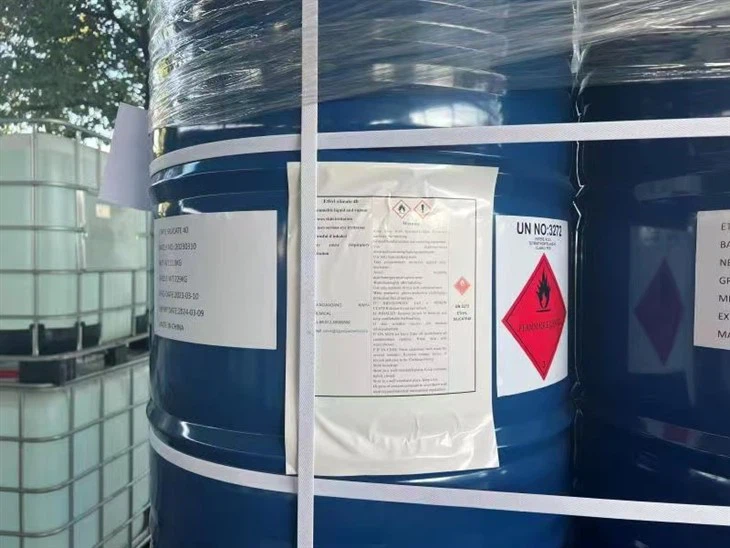
When Triethoxyvinylsilane is exposed to moisture, the ethoxy groups hydrolyze to form silanol groups (Si - OH). These silanol groups can then react with hydroxyl groups present on the surface of inorganic substrates such as glass, metal, and ceramics through a condensation reaction, forming strong covalent bonds. This chemical interaction is the foundation for its ability to enhance coating adhesion.
Mechanisms of Adhesion Improvement
Chemical Bond Formation
One of the primary ways Triethoxyvinylsilane improves coating adhesion is by forming chemical bonds between the coating and the substrate. As mentioned earlier, the silanol groups formed after hydrolysis can react with the hydroxyl groups on the substrate surface. For example, on a glass substrate, the silanol groups of Triethoxyvinylsilane can react with the silanol groups on the glass surface to form Si - O - Si bonds. These covalent bonds are very strong and provide a stable link between the coating and the substrate, preventing the coating from peeling off easily.
In addition to bonding with inorganic substrates, the vinyl group of Triethoxyvinylsilane can also participate in polymerization reactions with organic coating resins. For instance, in a vinyl - based coating system, the vinyl group of Triethoxyvinylsilane can copolymerize with the vinyl monomers in the coating resin during the curing process. This creates a cross - linked network that further enhances the adhesion between the coating and the substrate.
Surface Modification
Triethoxyvinylsilane can also modify the surface properties of the substrate. When it is applied to the substrate surface, it forms a thin layer that changes the surface energy of the substrate. A lower surface energy substrate can improve the wetting of the coating, allowing the coating to spread more evenly over the substrate surface. This better wetting ensures that the coating has a larger contact area with the substrate, which in turn improves adhesion.
Moreover, the silane layer can act as a barrier, protecting the substrate from environmental factors such as moisture and chemicals. By preventing the penetration of these harmful substances into the substrate - coating interface, the adhesion integrity is maintained over time.
Compatibility Enhancement
In multi - component coating systems, Triethoxyvinylsilane can improve the compatibility between different components. For example, in a coating system that contains both organic and inorganic components, Triethoxyvinylsilane can act as a coupling agent. It can interact with both the organic resin and the inorganic filler or substrate, reducing the interfacial tension between them. This improved compatibility results in a more homogeneous coating structure, which is beneficial for adhesion.
Applications in Different Coating Systems
Metal Coatings
In metal coating applications, Triethoxyvinylsilane plays a crucial role in preventing corrosion. When applied as a primer or incorporated into the coating formulation, it forms a strong bond with the metal surface. For example, on steel substrates, the silanol groups of Triethoxyvinylsilane can react with the iron oxide layer on the steel surface, creating a protective layer. This layer not only improves the adhesion of the top - coat but also acts as a barrier against moisture and oxygen, which are the main causes of corrosion.
Ceramic Coatings
Ceramic coatings are often used for their high - temperature resistance and hardness. Triethoxyvinylsilane can enhance the adhesion of ceramic coatings to various substrates. It can react with the hydroxyl groups on the ceramic surface during the coating process, ensuring a strong bond. Additionally, in ceramic - based composite coatings, it can improve the dispersion of ceramic particles in the organic matrix, leading to better adhesion and overall coating performance.
Glass Coatings
Glass is a smooth and non - porous substrate, which can make it challenging to achieve good coating adhesion. Triethoxyvinylsilane can solve this problem by forming chemical bonds with the glass surface. In glass coating applications such as anti - reflective coatings or self - cleaning coatings, Triethoxyvinylsilane can improve the adhesion of the functional coating layers to the glass substrate, ensuring long - term durability.
Comparison with Other Silane Coupling Agents
There are other silane coupling agents available in the market, such as Hexamethyldisilazane, Vinymethyltrimethoxysilane, and Ethyl Silicate 32. While these agents also have their own unique properties and applications, Triethoxyvinylsilane offers some distinct advantages in terms of adhesion improvement.
Hexamethyldisilazane is mainly used for surface silylation and as a reagent in organic synthesis. It is not as effective as Triethoxyvinylsilane in forming chemical bonds between the coating and the substrate, especially in applications where strong adhesion is required.
Vinymethyltrimethoxysilane has a similar structure to Triethoxyvinylsilane but with different alkoxy groups. The methoxy groups in Vinymethyltrimethoxysilane hydrolyze faster than the ethoxy groups in Triethoxyvinylsilane, which can sometimes lead to a less - controlled reaction. Triethoxyvinylsilane, on the other hand, provides a more stable and controllable hydrolysis and condensation process, resulting in better adhesion performance.
Ethyl Silicate 32 is often used as a binder in inorganic coatings. While it can form a strong bond with the substrate, it may not have the same reactivity towards organic coating resins as Triethoxyvinylsilane. Triethoxyvinylsilane's ability to copolymerize with organic resins makes it more suitable for hybrid coating systems where both organic and inorganic components are present.
Conclusion
In conclusion, Triethoxyvinylsilane is a powerful tool for improving the adhesion of coatings. Its unique molecular structure allows it to form chemical bonds with both inorganic substrates and organic coating resins, modify the substrate surface, and enhance the compatibility between different coating components. Whether in metal, ceramic, or glass coating applications, Triethoxyvinylsilane can significantly improve the adhesion and durability of coatings.
As a supplier of Triethoxyvinylsilane, we are committed to providing high - quality products and excellent technical support. If you are interested in improving the adhesion of your coatings or exploring the potential of Triethoxyvinylsilane in your applications, we encourage you to contact us for further discussion and procurement. We look forward to working with you to achieve the best coating performance.
References
- Plueddemann, E. P. (1991). Silane Coupling Agents. Plenum Press.
- Mittal, K. L. (Ed.). (1983). Adhesion Aspects of Polymeric Coatings. Plenum Press.
- Wicks, Z. W., Jones, F. N., & Pappas, S. P. (1999). Organic Coatings: Science and Technology. Wiley - Interscience.