

Hey there! As a supplier of Triethoxyvinylsilane, I've got a lot to share about how this nifty chemical affects the biocompatibility of materials. Biocompatibility is a big deal in many industries, especially in the medical and environmental sectors. It's all about how well a material can interact with living systems without causing any harm. So, let's dive right in and see what Triethoxyvinylsilane brings to the table.
First off, what is Triethoxyvinylsilane? It's a type of organosilane, which are compounds that have both organic and silicon-based parts. This particular one has a vinyl group attached to a silicon atom, along with three ethoxy groups. These chemical features give it some unique properties that can be used to modify the surface of materials.
When it comes to biocompatibility, the surface of a material is super important. Cells in our body interact with the surfaces of materials all the time, whether it's a medical implant or a biomaterial used in tissue engineering. A material with good biocompatibility should be able to support cell adhesion, growth, and function without triggering an immune response.
Triethoxyvinylsilane can play a key role in improving the biocompatibility of materials through surface modification. When applied to a material's surface, it can form a thin layer that changes the surface chemistry. This layer can make the surface more hydrophilic, which means it attracts water. In biological systems, water is essential for cell survival and function. A hydrophilic surface can help cells attach more easily and spread out, which is a good sign for biocompatibility.
For example, in the case of medical implants, a material coated with Triethoxyvinylsilane can be more compatible with the surrounding tissues. The improved cell adhesion can lead to better integration of the implant into the body, reducing the risk of rejection. This is crucial for the long - term success of implants like artificial joints or dental implants.
Another aspect where Triethoxyvinylsilane can have an impact is in the field of tissue engineering. Tissue engineering aims to create functional tissues by combining cells with a suitable scaffold material. The scaffold needs to be biocompatible to support cell growth and tissue formation. By treating the scaffold material with Triethoxyvinylsilane, we can enhance its biocompatibility and create a more favorable environment for cells.
Let's talk about some of the mechanisms behind how Triethoxyvinylsilane affects biocompatibility. One of the main ways is through the formation of covalent bonds with the material surface. The ethoxy groups on Triethoxyvinylsilane can react with hydroxyl groups on the material surface, forming a stable siloxane bond. This bond not only attaches the Triethoxyvinylsilane to the surface but also provides a platform for further chemical modifications.
The vinyl group on Triethoxyvinylsilane can also be used for additional functionalization. For instance, it can be used to attach bioactive molecules such as proteins or peptides. These bioactive molecules can further enhance the biocompatibility of the material by providing specific signals to cells. For example, a peptide that promotes cell adhesion can be attached to the vinyl group, making the material even more attractive to cells.
Now, let's compare Triethoxyvinylsilane with some other related silane compounds. Vinymethyltrimethoxysilane is another organosilane that is similar in some ways. It also has a vinyl group, but it has methoxy groups instead of ethoxy groups. The difference in the alkoxy groups can affect the reactivity and the properties of the resulting surface layer. Methoxy groups are generally more reactive than ethoxy groups, which means Vinymethyltrimethoxysilane may react faster with the material surface. However, this also means it may be more difficult to control the reaction.
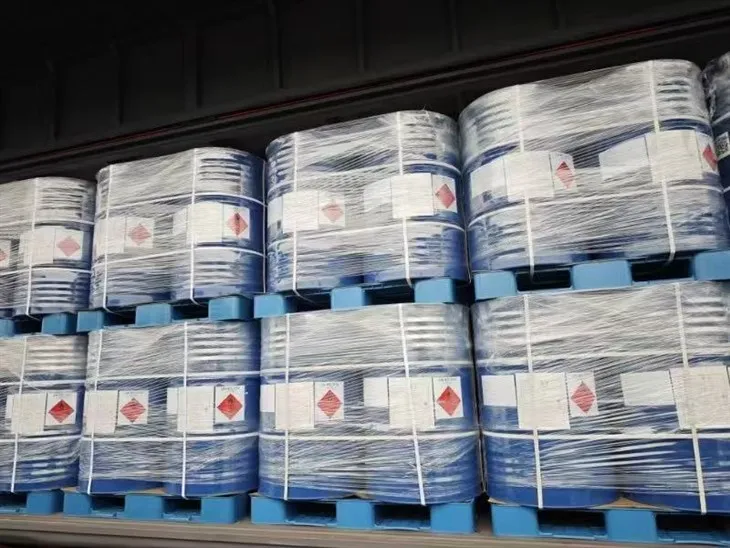

Ethyl Silicate40 is a different type of silane compound. It is mainly used as a binder or a precursor for silica coatings. While it can also be used to modify material surfaces, its effect on biocompatibility is different from Triethoxyvinylsilane. Ethyl Silicate40 forms a silica - rich layer, which can provide good mechanical properties but may not have the same bio - friendly surface chemistry as Triethoxyvinylsilane.
tetraethoxysilane is another well - known silane. It has four ethoxy groups and no vinyl group. It is often used in sol - gel processes to create silica - based materials. Although it can create a stable and biocompatible surface, the lack of a vinyl group limits its ability to be further functionalized with bioactive molecules compared to Triethoxyvinylsilane.
In addition to medical and tissue engineering applications, Triethoxyvinylsilane can also be used in environmental applications where biocompatibility is important. For example, in water treatment, materials used for filtration or adsorption need to be biocompatible to avoid harming the microorganisms involved in the treatment process. By using Triethoxyvinylsilane to modify these materials, we can ensure that they are more compatible with the biological components in the water treatment system.
However, it's important to note that the use of Triethoxyvinylsilane also has some considerations. The concentration of Triethoxyvinylsilane used for surface modification can affect the biocompatibility. Too high a concentration may lead to the formation of a thick layer that could have a negative impact on cell function. Also, the reaction conditions, such as temperature and pH, need to be carefully controlled to ensure a uniform and stable surface layer.
In conclusion, Triethoxyvinylsilane is a powerful tool for improving the biocompatibility of materials. Its unique chemical structure allows it to modify material surfaces in a way that enhances cell - material interactions. Whether it's for medical implants, tissue engineering, or environmental applications, Triethoxyvinylsilane has a lot to offer.
If you're interested in using Triethoxyvinylsilane for your projects or need more information about its biocompatibility applications, feel free to reach out. We're here to help you find the best solutions for your specific needs.
References
- Smith, J. A. (2018). Surface modification of materials for improved biocompatibility. Journal of Biomedical Materials Research.
- Johnson, R. B. (2019). Organosilanes in medical and environmental applications. Advances in Materials Science.
- Brown, C. D. (2020). The role of surface chemistry in cell - material interactions. Biomaterials Science.