

As a trusted supplier of Tetraethoxysilane (TEOS), I've often been asked whether this compound can form polymers. In this blog post, I'll delve into the science behind TEOS and explore its potential for polymer formation.
Understanding Tetraethoxysilane
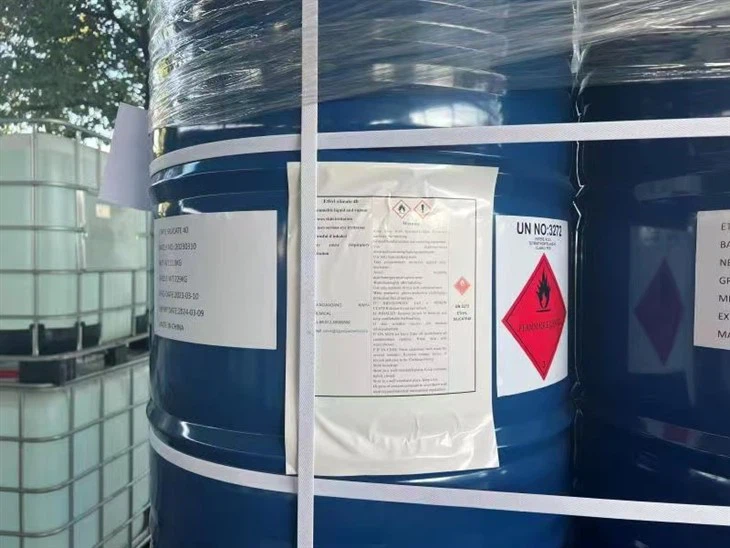
Tetraethoxysilane, also known as TEOS or ethyl silicate 40, is a colorless liquid with the chemical formula Si(OC₂H₅)₄. It is a widely used precursor in the synthesis of silica-based materials due to its reactivity and versatility. TEOS contains four ethoxy groups (-OC₂H₅) attached to a central silicon atom. These ethoxy groups can undergo hydrolysis and condensation reactions, which are the key processes in polymer formation.
Hydrolysis and Condensation Reactions
The first step in the polymer formation of TEOS is hydrolysis. When TEOS is exposed to water, the ethoxy groups react with water molecules to form silanol groups (-SiOH) and ethanol. The reaction can be represented as follows:
Si(OC₂H₅)₄ + 4H₂O → Si(OH)₄ + 4C₂H₅OH
The silanol groups are highly reactive and can undergo condensation reactions with each other. During condensation, two silanol groups react to form a siloxane bond (-Si-O-Si-) and release a water molecule. This process can continue, leading to the formation of larger siloxane chains and eventually polymers. The general condensation reaction can be written as:
2Si(OH)₄ → Si₂O(OH)₆ + H₂O
Factors Affecting Polymer Formation
Several factors can influence the polymer formation of TEOS. These include:
- pH: The pH of the reaction medium plays a crucial role in the hydrolysis and condensation reactions. At low pH values, the hydrolysis reaction is favored, while at high pH values, the condensation reaction is more dominant.
- Temperature: Higher temperatures generally increase the reaction rate of both hydrolysis and condensation. However, excessive temperature can also lead to the formation of undesirable by-products.
- Concentration: The concentration of TEOS and water can affect the rate and extent of polymer formation. Higher concentrations of TEOS can lead to faster polymer growth.
- Catalysts: Catalysts such as acids or bases can be used to accelerate the hydrolysis and condensation reactions. For example, hydrochloric acid or ammonia can be added to the reaction mixture to adjust the pH and promote polymer formation.
Applications of TEOS Polymers
The polymers formed from TEOS have a wide range of applications in various industries. Some of the common applications include:
- Coatings: TEOS polymers can be used to form protective coatings on surfaces. These coatings can provide excellent adhesion, hardness, and chemical resistance.
- Adhesives: The siloxane bonds in TEOS polymers make them suitable for use as adhesives. They can bond to a variety of substrates, including metals, glass, and ceramics.
- Nanocomposites: TEOS polymers can be incorporated into other materials to form nanocomposites with enhanced properties. For example, they can be used to improve the mechanical strength and thermal stability of polymers.
- Catalysts: TEOS polymers can be used as supports for catalysts. The high surface area and porosity of the polymers provide a large number of active sites for catalytic reactions.
Related Products
In addition to Tetraethoxysilane, we also offer other silicone products that may be of interest to you. These include Methyl Silicate, Ethyl Silicate 32, and Hexamethyldisiloxane. These products have their own unique properties and applications, and they can be used in combination with TEOS to achieve specific performance requirements.

Conclusion
In conclusion, Tetraethoxysilane can indeed form polymers through hydrolysis and condensation reactions. The polymer formation process is influenced by several factors, including pH, temperature, concentration, and catalysts. The polymers formed from TEOS have a wide range of applications in various industries, making them a valuable material in the field of materials science.
If you are interested in purchasing Tetraethoxysilane or any of our other silicone products, please feel free to contact us for more information. We are committed to providing high-quality products and excellent customer service. Our team of experts is available to assist you with any technical questions or product recommendations.
References
- Brinker, C. J., & Scherer, G. W. (1990). Sol-Gel Science: The Physics and Chemistry of Sol-Gel Processing. Academic Press.
- Iler, R. K. (1979). The Chemistry of Silica: Solubility, Polymerization, Colloid and Surface Properties, and Biochemistry. Wiley.
- Ozin, G. A., & Arsenault, A. C. (2005). Nanochemistry: A Chemical Approach to Nanomaterials. RSC Publishing.